About Us

2-D Materials
Quantum Nanodot Technologies
Composite Materials
Composite Materials
Quantum Nanodot Technologies
Composite Materials
Quantum Nanodot Technologies
Quantum Nanodot Technologies
Quantum Nanodot Technologies
Partner Intranet
Quantum Nanodot Technologies
Quantum Nanodot Technologies
About Us

A Unified Advanced Materials Platform
S.T.A.R.K. approaches advanced materials as an integrated technology category with three complementary areas of focus:
2-D Materials
Ultra-thin, high-performance materials engineered at the atomic or near-atomic scale for enhanced conductivity, thermal behavior, sensing, and system integration.
Composite Materials
Engineered materials that combine multiple constituents to create structural systems with improved strength-to-weight ratios, corrosion resistance, durability, and design flexibility.
Quantum Nanodot Technologies
Nanoscale semiconductor materials with tunable optical, electronic, and photonic properties for applications in energy, sensing, coatings, displays, and advanced system functionality.
These three categories are distinct, but they are not isolated.
The larger opportunity lies in how they can work together.
A composite panel may benefit from embedded 2-D materials for conductivity or sensing. A coating may incorporate nanodot behavior for optical or energy-related functionality. A structural material may combine high mechanical performance with data, energy, or environmental responsiveness.
This is where materials science moves beyond static physical performance and begins to support intelligent infrastructure.
2D Nano Materials – The Next Revolution

Thin by Form. Powerful by Function.
2-D materials are substances engineered in extremely thin layers—often at the scale of a few atoms or molecules—while exhibiting exceptional electrical, thermal, optical, or mechanical properties.
These materials offer major potential because their performance is not driven by bulk thickness, but by structure and behavior at the microscopic level.
Areas of interest may include:
- High electrical conductivity
- Thermal management
- Lightweight conductive layers
- Barrier and protective-film applications
- Chemical and environmental sensing
- Energy-storage interfaces
- Flexible and embedded electronics
- Surface enhancement technologies
- Advanced coatings
- Smart material integration
Within the S.T.A.R.K. platform, 2-D materials are particularly valuable where the goal is to add functionality without adding excessive weight, bulk, or structural complexity.
That makes them relevant to future work in:
- Energy systems
- Sensors and controls
- Building-system integration
- Coatings and protective surfaces
- Water-treatment components
- Smart infrastructure interfaces
The promise of 2-D materials is not merely that they are small.
It is that they can allow a system to do more with less.
Composite Materials
Structural Performance Reimagined
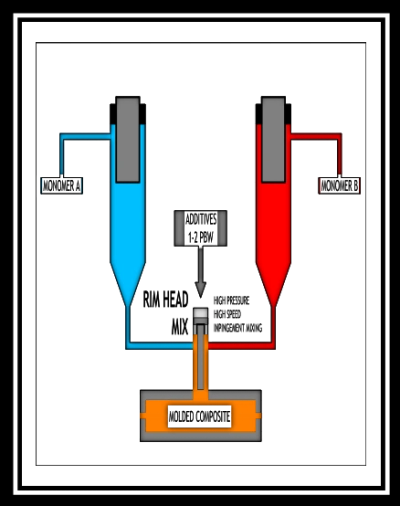
Composite materials combine two or more constituent materials to create a finished system with improved properties relative to conventional single-material construction.
Done properly, composites can offer major advantages in structural applications where strength, weight, environmental resistance, and manufacturing repeatability all matter.
S.T.A.R.K. Laboratories is interested in composite systems that can support applications in construction, infrastructure, manufacturing, transportation, energy, and resilient community systems.
Potential advantages include:
- Improved strength-to-weight performance
- Corrosion resistance
- Moisture resistance
- Reduced maintenance requirements
- Design flexibility
- Greater consistency in manufactured components
- Enhanced thermal performance
- Improved durability in harsh environments
- Integration with modular or pre-engineered building systems
- Compatibility with advanced coatings or embedded technologies
In the built environment, composite materials may support applications such as:
- Structural panels
- Building envelope systems
- High-performance modular components
- Utility enclosures
- Protective housings
- Mechanical and industrial components
- Water-system components
- Specialized infrastructure assemblies
Composite materials are especially relevant when infrastructure must remain durable while reducing lifecycle maintenance and improving manufacturability.
They are not simply an alternative to traditional materials.
Used well, they can become an enabling platform for stronger, lighter, longer-lasting systems.
Quantum Nanodot Technologies
Nanoscale Materials with High-Value Functional Behavior
Quantum nanodots are nanoscale semiconductor particles whose optical and electronic behavior can be tuned based on their size, composition, and structure.
Because their properties can be engineered very precisely, nanodot technologies have the potential to support next-generation advances across multiple technical domains.
Areas of interest may include:
- Optical conversion
- Light absorption and emission
- Advanced coatings
- Solar and energy-related applications
- Sensors and detection systems
- Imaging technologies
- Smart surfaces
- High-sensitivity monitoring systems
- Electronic and photonic devices
- Materials with responsive or tunable characteristics
Within the S.T.A.R.K. materials platform, quantum nanodots are particularly compelling where materials are expected to do more than provide passive structure.
They may contribute to systems that:
- respond to light,
- improve sensing performance,
- support energy-conversion strategies,
- enhance coatings and surfaces,
- or enable new classes of integrated material behavior.
The long-term significance of nanodots lies in their ability to transform a material from something merely structural into something functional, responsive, and data-aware.

Chemical Vapor Deposition
Using Chemical Vapor Deposition (CVD) techniques, we can mass produce different two-dimensional materials. In materials science, the term single-layer materials or 2D materials refers to crystalline solids consisting of a single layer of atoms. These materials are promising for some applications in nanotechnology as well as optics, semiconductors, and power storage. Single-layer materials derived from single elements generally carry the -ene suffix in their names, e.g. graphene. Single-layer materials that are compounds of two or more elements have -ane or -ide suffixes. 2D materials can generally be categorized as either 2D allotropes of various elements or as compounds
Different Materials Available Upon Request
- Graphene: particles, suspension, nanosheets, or nanotubes
- Graphyne: particles, suspension, nanosheets, or nanotubes
- Graphane: particles, suspension, nanosheets, or nanotubes
- Boron Nitride: Nanosheets or nanotubes
- Borocarbonitride: Nanosheets or nanotubes
- Silicon Nitride: Nanosheets or nanotubes